Waco AQC-6
General Description
The Waco AQC-6 was built by the Waco Aircraft Company of Troy, Ohio. They were a major manufacturer of aircraft in the United States from 1928 to 1939. Beginning in Lorain, Ohio in 1921 as the Weaver Aircraft Company, they moved to Troy in 1924 and became the Advance Aircraft Company keeping the Waco logo. Then, in 1929 they changed their name to the Waco Aircraft Company. The Waco (wah-co) series of four-seat cabin biplanes was initiated in 1931 and were produced continuously in progressively refined models until 1939.
Every Waco aircraft built has a three-letter designation for its name instead of a more standard name like “Cub” or “Skyhawk”. The reason for this is that the Waco Aircraft Company build custom aircraft and had numerous fuselage designs, wing styles, and engine options. The Waco system of model designation takes some time to understand but simply put, the first letter identifies the engine type, the second the wing style, and the third the fuselage design. If there is a number following this three-letter designation, it marks the last digit of the model year.
As an example, the Waco AQC is as follows:
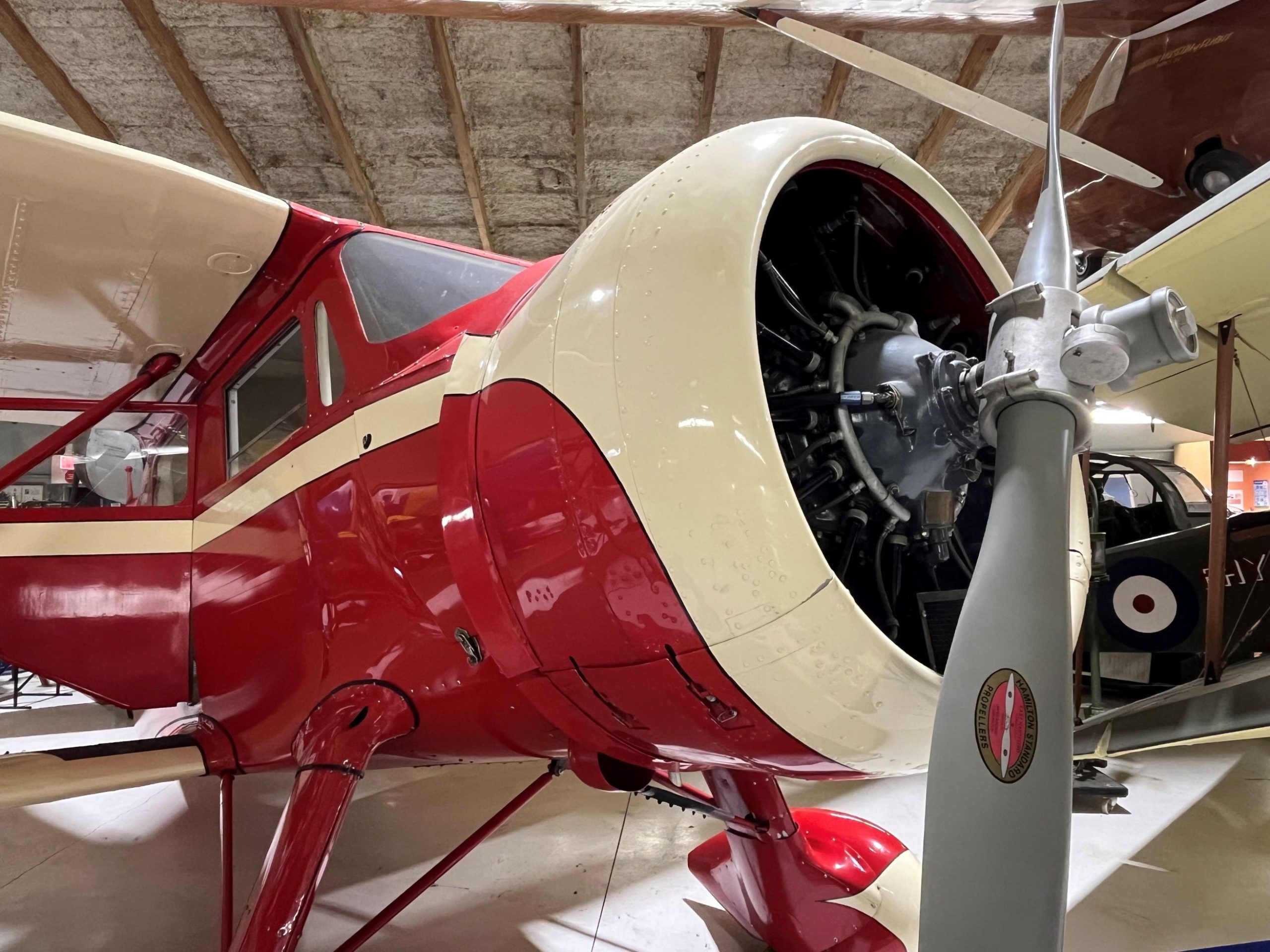
• A – This letter represents the engine type. In this case, A = Jacobs L-6 330hp radial engine
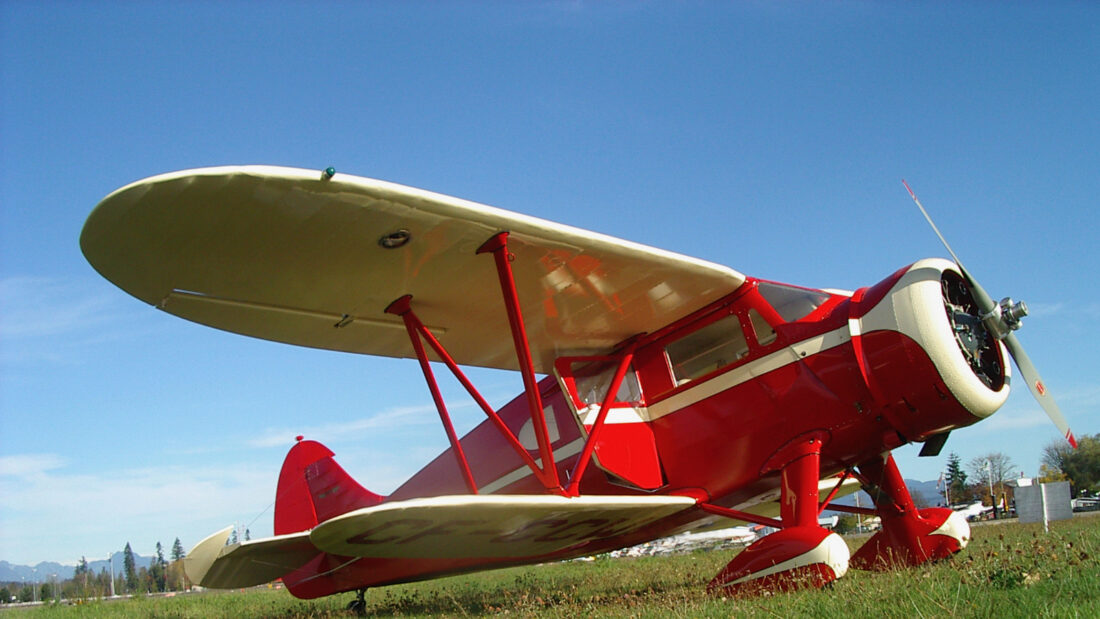
• Q – This letter identifies the airframe series. The “Q” series had a sesquiplane wing design, featuring a larger upper wing, and a smaller lower wing, and ailerons only on the top wings
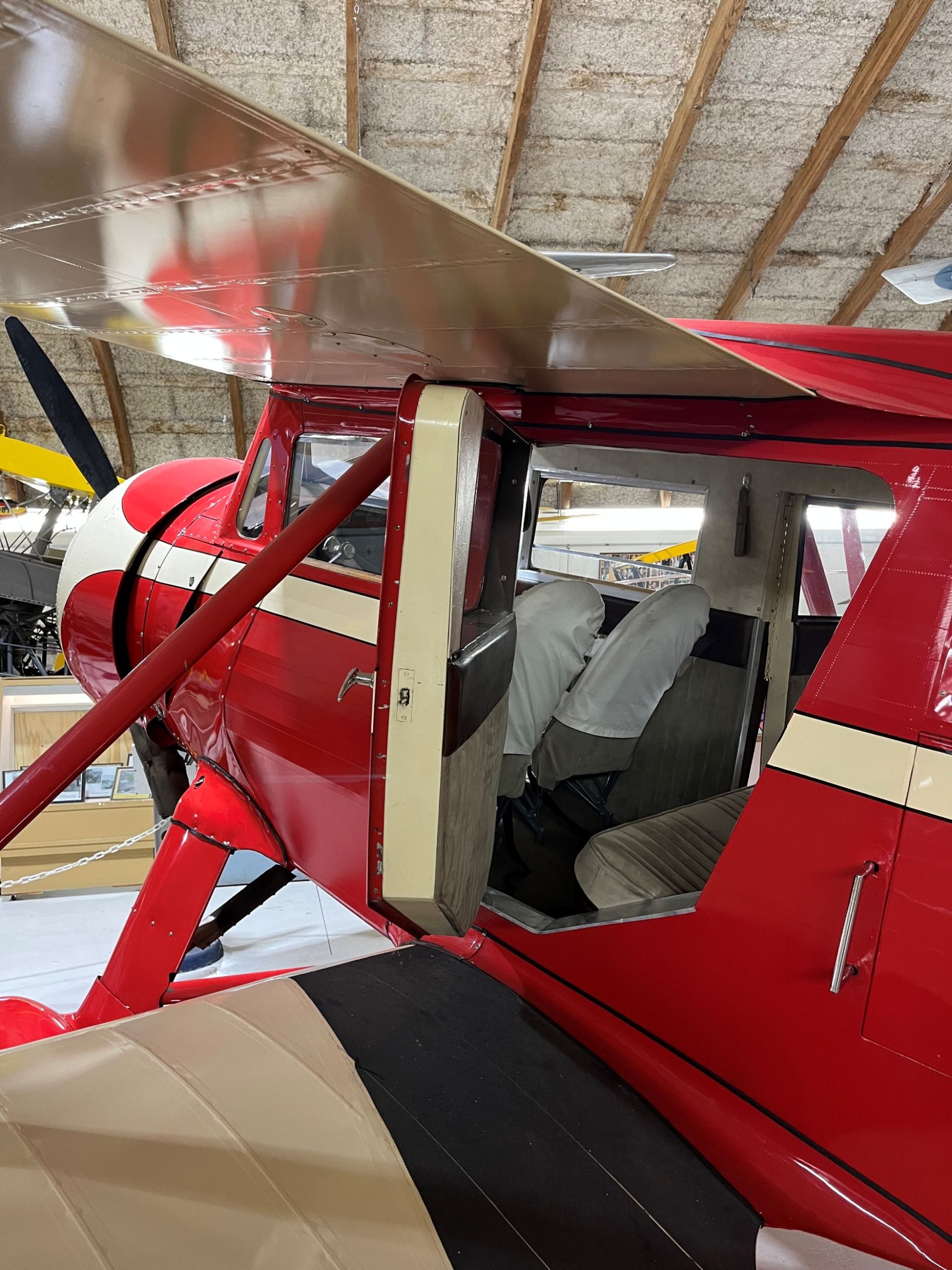
• C – Stands for Fuselage Design, C = “Custom Cabin” or Enclosed cabin, seating for 4
• 6 – Notes the Model Year, 6 = This means that the model debuted in 1936
Our Waco AQC-6
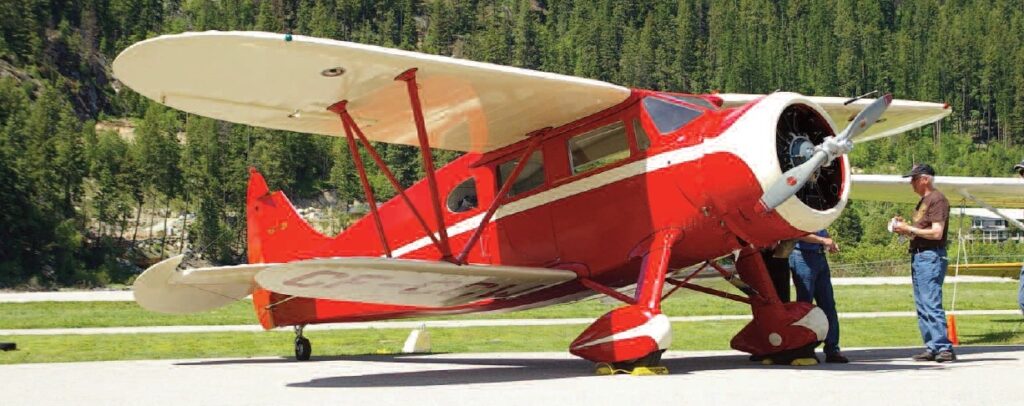
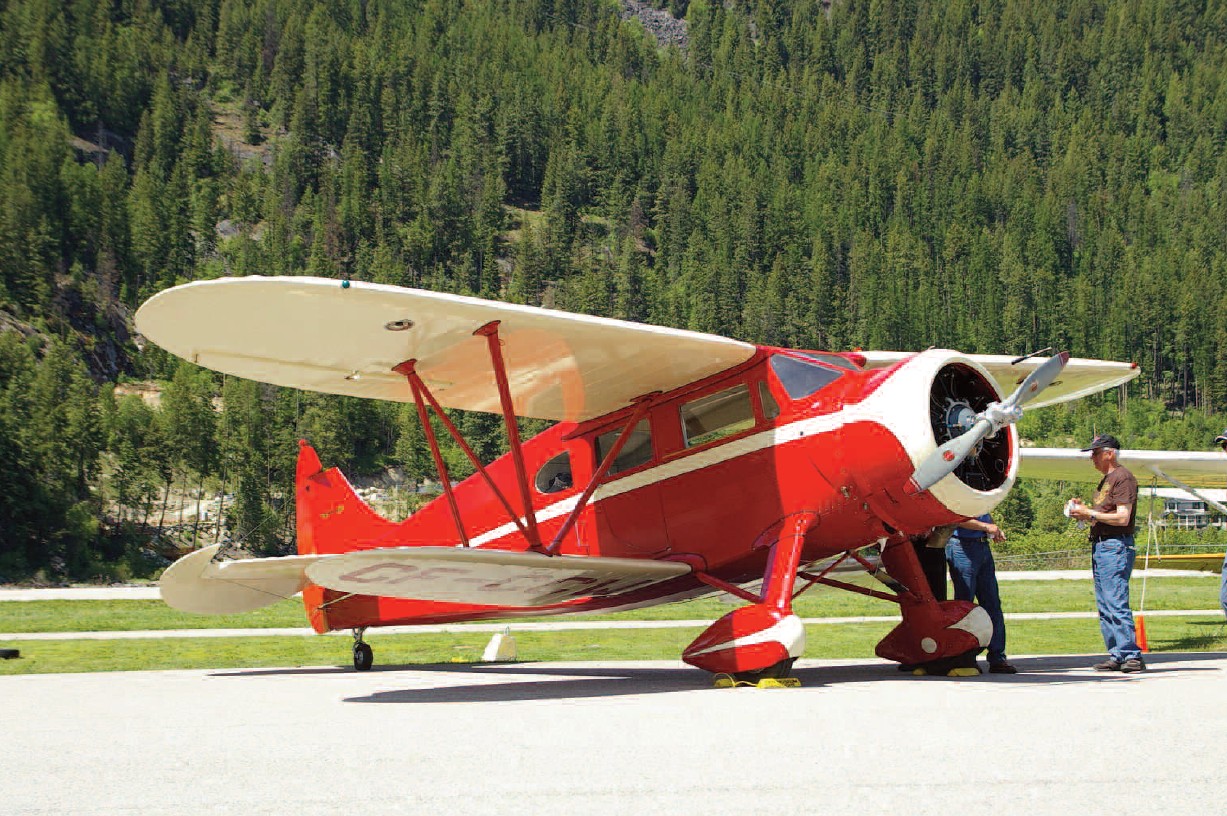
The Museum’s aircraft was manufactured in 1937 at Waco Aircraft’s factory in Troy, Ohio as a ZQC-6 model (285 hp Jacobs L-5MB engine) but was converted to an AQC-6 (330 hp Jacobs L-6MB) in 1947.
Purchased new by the Department of National Defence, Ottawa, it was operated by the Department of Transport until 1949, when it was moved out to the British Columbia coast. It was then briefly operated by B.C. Airlines, followed by a logging company. Dr. Jack Pickup of Alert Bay was the next owner, who acquired the airplane in 1953 and routinely used it as a “flying doctor” float plane. Dr. Pickup used the AQC to make house-calls to remote coastal communities, and when medical situations necessitated, he would fly his patients to his hospital in Alert Bay. During its long flying career the AQC-6 suffered several landing accidents.
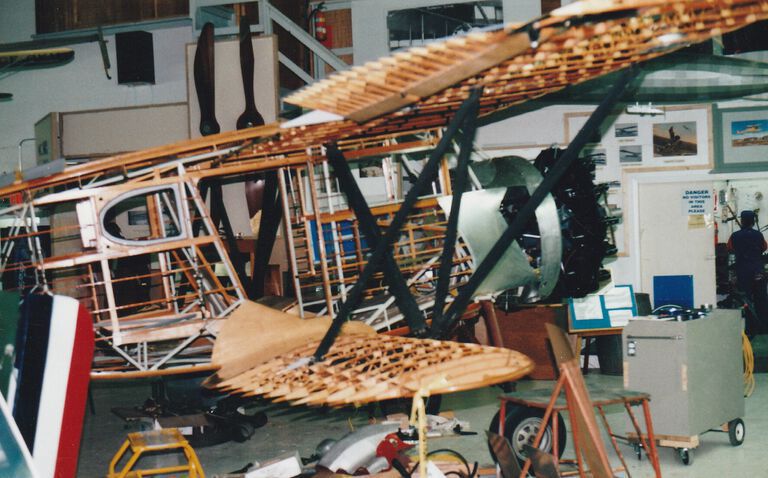
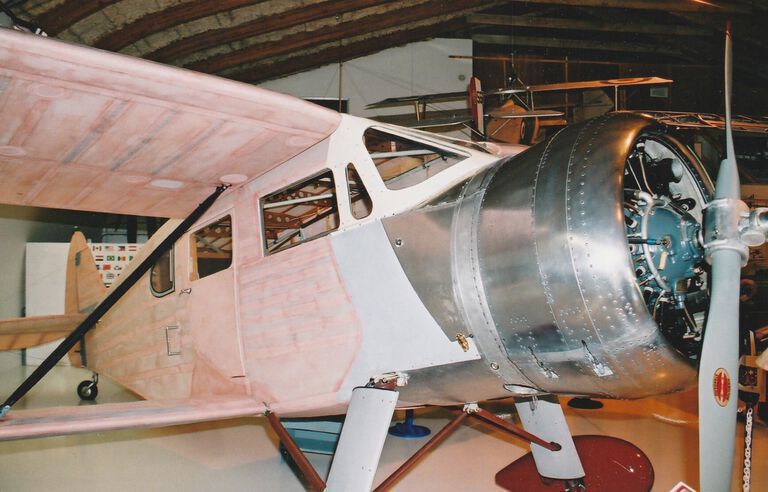
Our Waco AQC-6 was donated to the Canadian Museum of Flight in 1980 by the legend himself, Dr. Pickup. Although the aircraft was donated on floats, it is now operated on wheels. After a twenty-year restoration by volunteers at our museum, its first flight in over thirty years was carried out on February 13th, 2002. Due to the complexity of the restoration, original drawings were required to perform the certified rebuild. The Smithsonian Institute graciously provided the Canadian Museum of Flight with all the necessary drawings to complete the project and we are forever grateful.
We are proud to say that this aircraft is one of our museum’s airworthy aircraft, and it can be seen flying at various airshows and aviation events throughout the year in the Fraser Valley area. For more information on the history of this aircraft, please see Dr. Jack Pickup, British Columbia’s Flying Doctor in our history section, or follow the link at the bottom of this page.
The Canadian Museum of Flight is dedicated to preserving Canada’s aviation heritage, from rare artifacts to the very aircraft that shaped our history. Your support allows us to restore, maintain, and share these treasures with the public, inspiring future generations to reach for the skies. Every gift makes a lasting impact — join us in keeping aviation history alive: Donate Now!

Technical Details:
- Serial: 4646, CF-CCW
- Manufactured: 1937
- Engine: 330 hp Jacobs L-6MB 7-cylinder radial
- Max Speed: 170 mph (274 km/h)
- Cruising Speed: 155 mph (249 km/h)
- Service Ceiling: 18,500 ft (5,638 m)
- Range: 550 mi (885 km)
- Empty weight: 2,313 lb (1,049 kg)
- Loaded weight: 3,800 lb (1,724 kg)
- Span: 35 ft (10.7 m)
- Length: 26 ft 8 in (8.1 m)
- Height: 8 ft 8 in (2.6 m)
- Wing Area: 244 sq ft (22.7 sq m)
(Photo credits: C. Hutchins, V. Bentley)