Mignet Pou-du-Ciel (Flying Flea)
(Not available for viewing)
General Description
Furniture designer Henri Mignet’s ultra-light Pou du Ciel (Flying Flea) tandem-wing light plane was a popular airplane for its simplicity and affordability. The name Pou du Ciel translates from French to “Louse of the Sky” which paid homage to the Ford Motel T, which French aptly nicknamed Pou de la Route translating to “Louse of the Road.” Wanting to create the Model T of the air, Mignet named his creation the Pou du Ciel, which quickly began getting called by it’s English translation, the Flying Flea. The first version of the Flying Flea flew in 1933 and soon after plans were made available to the public.
This prototype had a 17hp Aubier-Dunne 500cc, two-stroke motorcycle engine. Between the 1930’s and 1980’s, vast numbers were built all over the world in more than 300 variants, and with a variety of engines.
The Flying Flea was designed to be very simple. Unlike a conventional airplane that has ailerons for roll, a rudder to control yaw, and elevators to control pitch, the Flying Flea only had a rudder to provide directional or yaw control, meanwhile pitch control was provided by the entire upper wing pivoting. This meant that the Flying Flea had no rudder pedals. Pushing forward and back on the stick provided pitch control, and movement of the stick left and right provided yaw, and a the secondary effects of yaw, which is roll. Mignet claimed that anyone who could build a packing case and drive a car could build and fly a Flying Flea.
Development of the design continued after World War Two, with more versions and engines being incorporated. There was even a two-seat version of the Flying Flea designed and flown with a 100hp engine as its powerplant.
The unstable flying characteristics of the Flying Flea initially gave it a well-deserved bad reputation, but it continued to be popular among budget-conscious aviators. As safer and more conventionally designed homebuilt and plans built options came onto the market the Flying Flea lost popularity. While some examples still fly in countries around the world, most have been taken out of service and some now reside in air museums.
Our Mignet Pou-du-Ciel (Flying Flea)
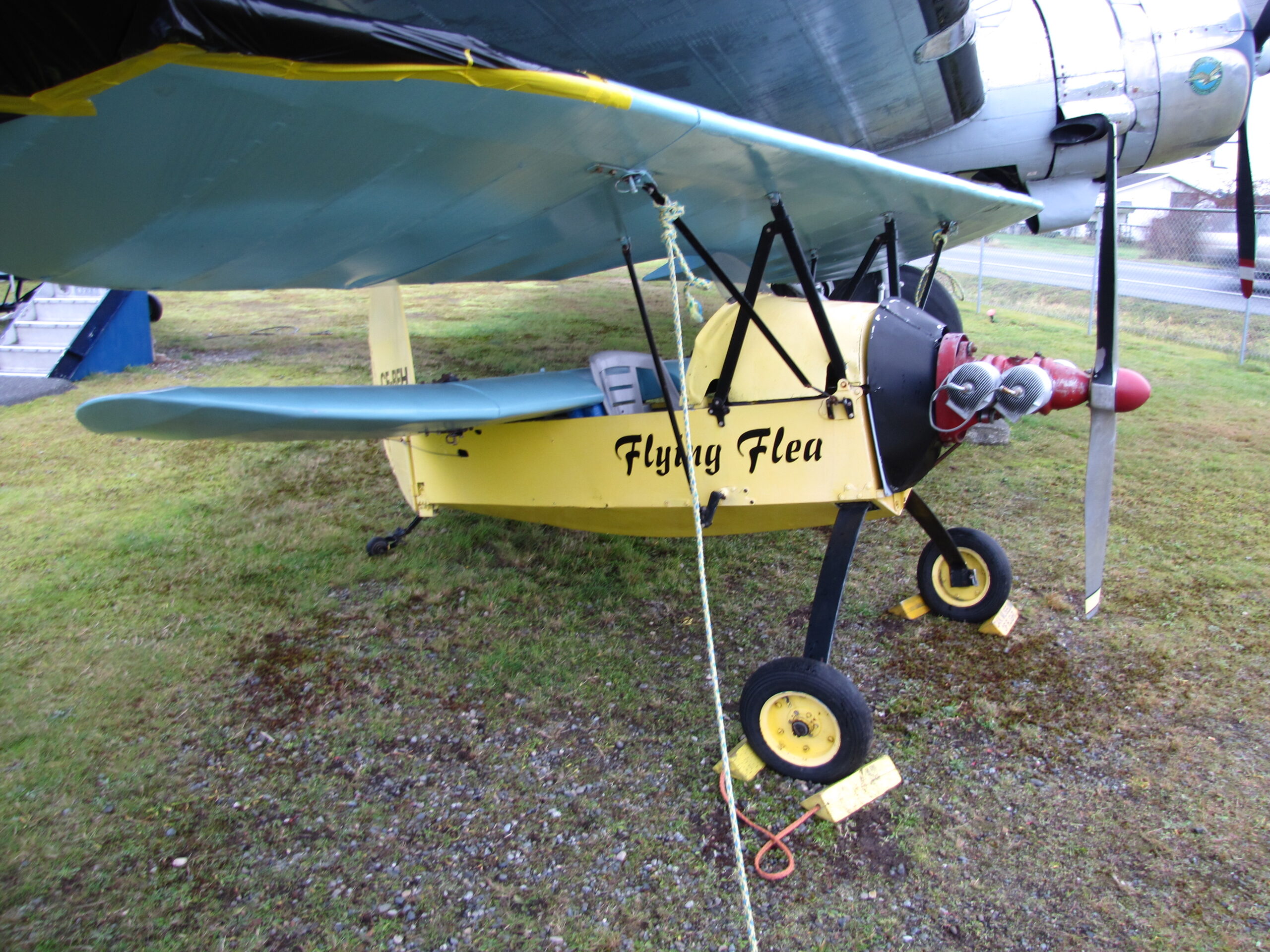
The Museum’s aircraft was built locally by John Sayle in 1962. Due to the unavailability of European engines, John substituted a 75 hp McCulloch engine that was readily available as surplus from target drones.
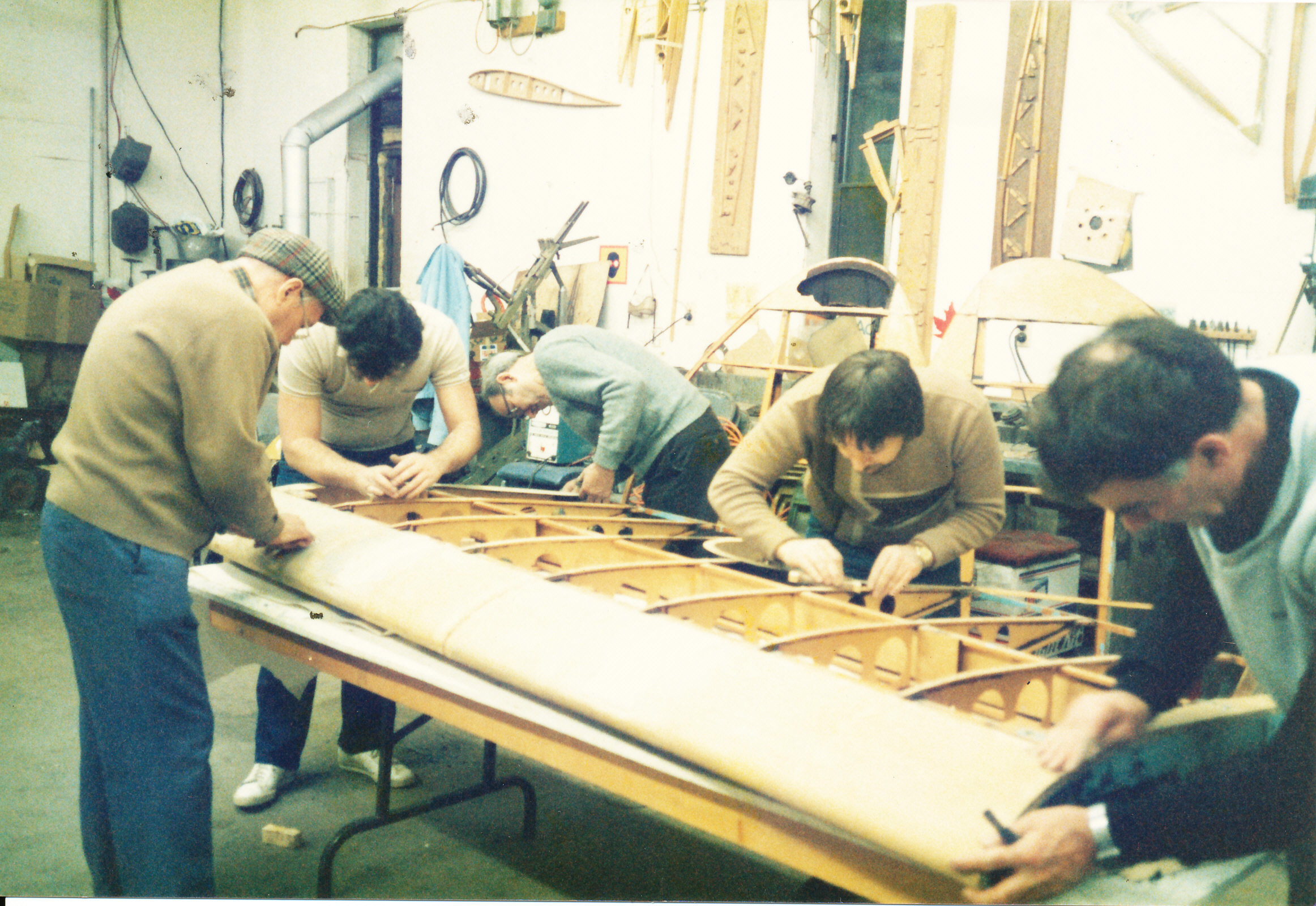
John displayed RFH at airshows and being one of the first Flying Fleas in the area, it generated considerable interest in the type. Unfortunately, it made at only one flight, which resulted in damage to the aircraft. RFH was repaired and then donated to Chapter 85 of the Experimental Aircraft Association, located at Delta Heritage Air Park, who in turn donated it to the Canadian Museum of Flight in 1982. In 1987, the Flying Flea was dismantled, had its structure inspected, and then recovered but a team of volunteers.
The Canadian Museum of Flight is dedicated to preserving Canada’s aviation heritage, from rare artifacts to the very aircraft that shaped our history. Your support allows us to restore, maintain, and share these treasures with the public, inspiring future generations to reach for the skies. Every gift makes a lasting impact — join us in keeping aviation history alive: Donate Now!
Technical Details:
- Registration: CF-RFH
- Manufactured: 1962
- Engine: 75 hp McCulloch horizontally opposed
- Maximum speed: 91 mph (146 km/h)
- Empty weight: 421 lb (191 kg)
- Maximum weight: 643 lb (292 kg)
- Span: 18 ft 2 in (5.5 m)
- Length: 12 ft 6 in (3.8 m)
- Height: 5 ft 8 in (1.7 m)
- Wing area: 108 sq ft (10 sq m)